
A Confident Smile Starts Here
Braces for kids and teens
Straight teeth are about more than appearance. They're about health, function, and confidence. At Happy Kids Dentistry, we provide comprehensive braces treatment in a supportive, encouraging environment. We help your child achieve the smile they deserve while building confidence that lasts a lifetime.

Why braces matter for growing smiles
Braces are the gold standard for straightening teeth, correcting bite problems, and improving dental health. During childhood and teenage years, your child's teeth and jaw are still developing, making this the ideal time for orthodontic treatment. At Happy Kids Dentistry, we understand that orthodontics is more than straightening. It's about creating healthy, functional smiles that support confidence, clear speech, and proper chewing. Our team has extensive experience working with children and teens, and we create a comfortable, judgment-free environment where your child feels heard and supported throughout their treatment journey.

Why your child benefits from braces
Orthodontic treatment does far more than create a beautiful smile. Early intervention prevents future complications, improves oral health, and gives your child confidence in their appearance and social interactions.
Healthier teeth and gums
Straight teeth are easier to clean with a toothbrush and floss, reducing the risk of cavities and gum disease throughout your child's life. When teeth are properly aligned, they distribute bite force evenly, reducing wear and protecting tooth enamel. Correcting bite problems early prevents jaw pain, headaches, and speech issues that can develop later. Proper alignment supports long-term oral health and protects your child's smile for decades.
Confidence that supports development
A smile your child feels good about goes far beyond appearance. Orthodontic treatment helps children feel more confident in photos, social situations, and everyday interactions. This confidence supports healthy social development, academic performance, and self-esteem during important growing years. Your child moves through school and into adulthood with a smile they're proud to show.
Improved function and comfort
Misaligned teeth can cause difficulty chewing, digestion problems, and mouth breathing that affects sleep quality and overall health. Crowded or protruding teeth can make speaking less clear. Braces correct these functional issues, improving your child's ability to eat comfortably, speak clearly, and breathe properly. Many children are surprised by how much more comfortable eating and speaking become after treatment begins.
Our braces and orthodontic options

Traditional metal braces
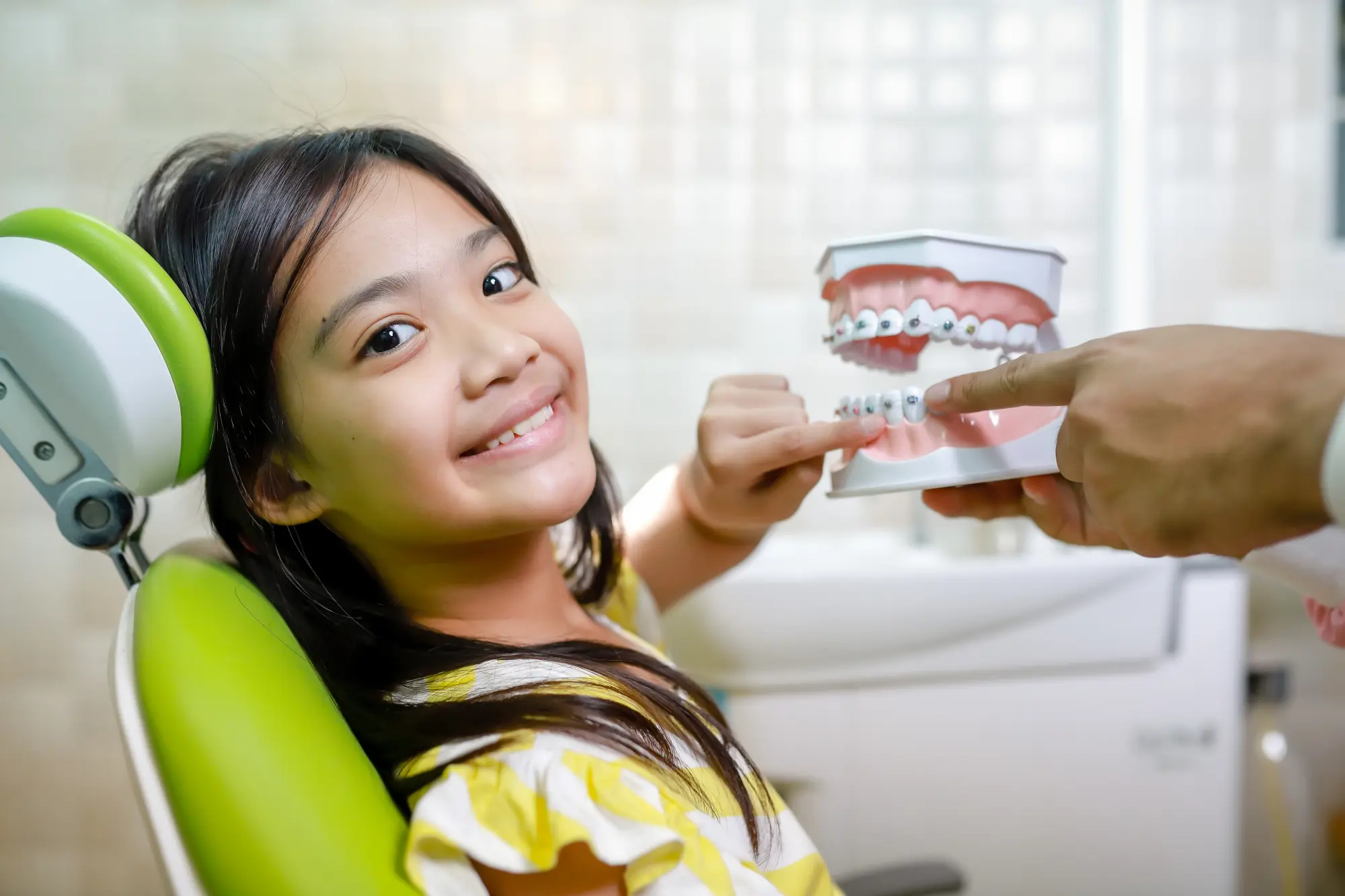
Metal braces are the most reliable and cost-effective option for straightening teeth and correcting bite problems. Small metal brackets attach to each tooth and connect with a metal wire that gently guides teeth into proper alignment. Over time, we adjust the wire to gradually move teeth toward their ideal position. Metal braces work beautifully for all types of misalignment and bite correction. Many kids and teens personalize their braces with colorful bands, making them feel like a fun part of their style. Metal braces are durable, require no special care beyond regular brushing and flossing, and deliver excellent results.

Ceramic braces
Ceramic braces work exactly like metal braces but use tooth-colored or clear brackets that blend in with your child's teeth. The wire remains visible, but the overall appearance is less noticeable than traditional metal braces. Ceramic braces are an excellent option for teens who want a more discreet look without sacrificing effectiveness or durability. They require the same care and maintenance as metal braces and deliver equally beautiful results. Ceramic braces cost slightly more than metal but offer the confidence boost of a less obvious appliance.

Clear aligners
Clear aligners are a modern alternative to braces for mild to moderate straightening needs. Your child wears a series of custom-made, nearly invisible plastic trays that gradually move teeth into alignment. Aligners are removable, so eating and cleaning teeth is easier than with braces. Many teens prefer aligners because they're less noticeable and feel more comfortable. However, aligners require discipline. Your child must wear them 20-22 hours per day for treatment to work. They work best for straightforward cases; complex bite problems or severe crowding may require traditional braces.

Lingual braces
Lingual braces are similar to traditional metal braces but are attached to the back (tongue side) of your child's teeth, making them completely invisible from the front. Lingual braces are highly customized and deliver excellent results for all types of misalignment. Because they're hidden, many teens choose lingual braces for confidence and appearance. They do require a short adjustment period for tongue comfort and take slightly more skill to clean around, but they're an excellent option for teens who want total discretion. Lingual braces are more expensive than traditional options but offer unmatched invisibility.

Early intervention and phase one treatment
Some children benefit from early orthodontic evaluation and phase one treatment during their primary or early mixed dentition (ages 6-10). Early intervention can guide jaw growth, create space for incoming adult teeth, and correct developing bite problems before they become severe. Phase one treatment may use specialized appliances like palatal expanders or partial braces to address specific issues. After primary teeth are shed and adult teeth come in, phase two treatment (typically with full braces) completes the smile. Early intervention can reduce the need for extractions and shorten overall treatment time later.
Your child's braces journey
From initial evaluation through treatment completion, we guide your family through every step with clear communication and ongoing support.
Consultation and treatment planning
Your child's journey begins with a comprehensive consultation where we listen to your concerns and examine their teeth, bite, and jaw development. We take digital X-rays and 3D images to assess alignment and identify any bite problems. We discuss treatment options: metal, ceramic, clear aligners, or lingual braces. We help you choose what's best for your child's needs, preferences, and budget. We explain the expected timeline, what to expect during treatment, and answer all your questions. If we recommend early intervention, we'll explain the benefits and process for phase one treatment.
Treatment completion and retention
When teeth have reached their ideal alignment and bite is corrected, we remove the braces. This is a moment many kids and teens look forward to! Your child's teeth are cleaned and polished, and we take final photos to celebrate their beautiful new smile. To maintain results, your child wears a retainer as directed. Typically, full-time initially, then at night long-term. Retainers are essential; they keep teeth in their new position as bone and tissues stabilize. We schedule regular follow-up appointments to ensure retention is working and to transition your child to regular preventive dental care with their primary dentist.
Braces placement and adjustment visits
Once treatment begins, we place braces carefully and explain exactly how to care for them. Your child will visit every 6-8 weeks for adjustments. We tighten wires, replace bands, and monitor progress toward their smile goals. Visits are quick and straightforward. We check how your child is doing with cleaning and care, celebrate progress, and keep them motivated. Your child will learn excellent oral hygiene habits during treatment that support lifelong dental health. We answer questions at every visit and address any discomfort or concerns right away.
Questions about braces for kids and teens
Families often have important questions about braces, timelines, and what to expect. Here are answers to what we hear most.


